Improving Air Distribution and Moisture Management with Destratification Fans for Indoor Water Parks
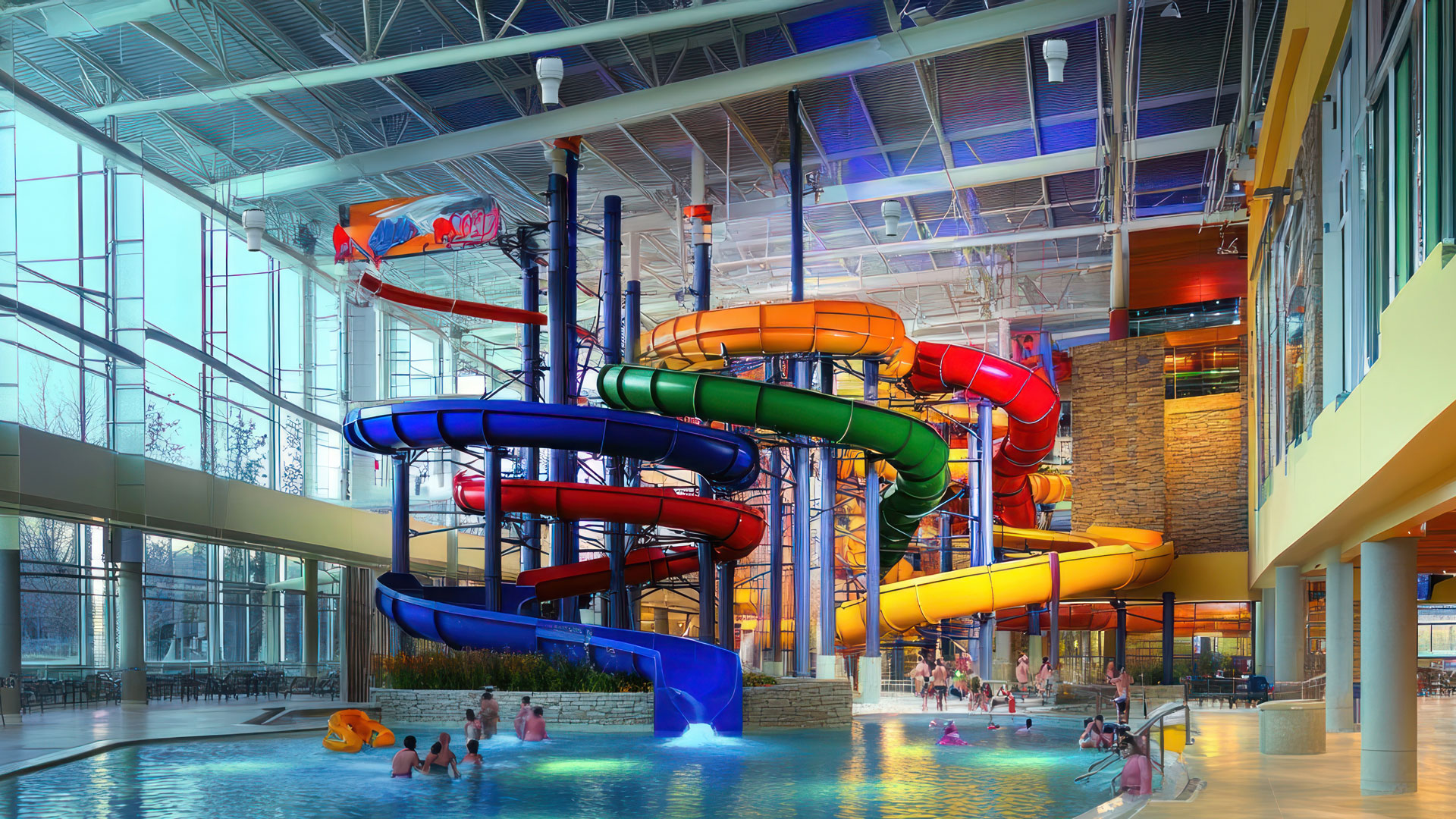
Indoor water parks create one of the most demanding indoor environments for a building. Large volumes of warm water continuously add heat and moisture to the air, while slides, splash features, wave pools, and high occupancy can further increase evaporation.
When that warm, humid air is not distributed effectively, it can collect near ceilings, roof structures, windows, and other building surfaces. Over time, condensation can contribute to corrosion, mold, deterioration of building materials, and costly maintenance problems. Airius fans can provide strategically controlled air movement to help existing HVAC and dehumidification systems distribute conditioned air more effectively throughout these large, challenging spaces.
The Challenge
Controlling humidity in an indoor water park requires more than simply installing dehumidification equipment. ASHRAE identifies air distribution as a critical part of natatorium design because conditioned air must reach the areas where it is needed. Poorly distributed air can create stagnant zones, temperature stratification, condensation on exterior surfaces, and reduced HVAC performance.
The building itself can also be at risk. Sustained high humidity and condensation can contribute to mold, deterioration of ceilings and walls, and corrosion of structural components. In severe cases, ASHRAE notes that condensation-related corrosion can compromise roof structures.
At the same time, airflow must be carefully controlled. Excessive air velocity directly across the water surface can increase evaporation, adding even more moisture to the space and increasing the load on dehumidification equipment.
The Airius Solution
Airius fans can be strategically positioned to address stagnant upper-level air, temperature stratification, and areas where conditioned air is not effectively reaching building surfaces or intended return-air pathways.
The goal is not to create strong airflow across the pools. Instead, Airius fans can complement the existing HVAC and dehumidification strategy by improving circulation in appropriate areas of the building while avoiding unnecessary airflow across the water surface.
For indoor water parks, two Airius systems are particularly well suited.

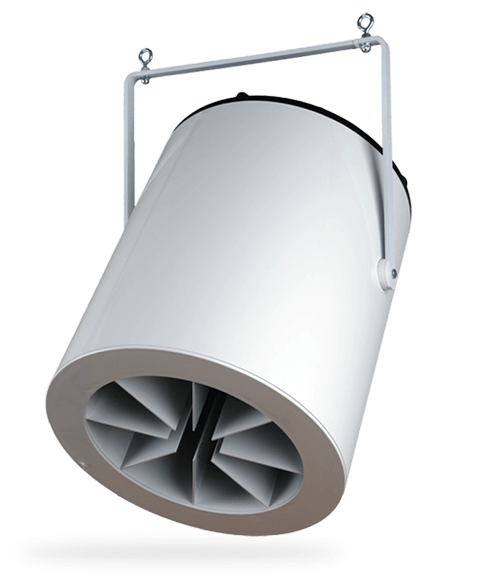
Air Pear EC Series
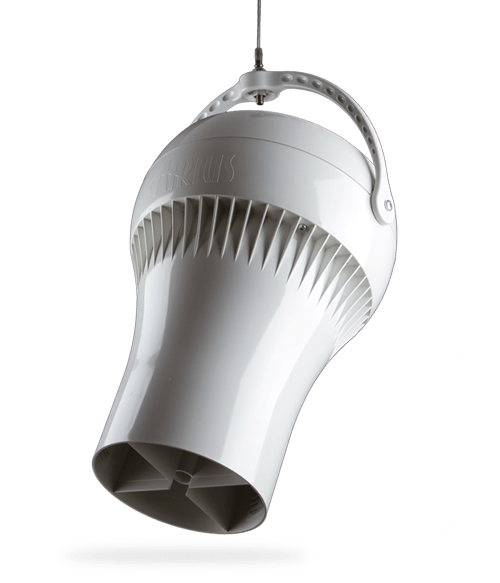
The Air Pear EC Series provides greater flexibility for expansive water parks with high ceilings and large interior volumes. Multiple models accommodate ceiling heights from approximately 15 to 100 feet, allowing airflow to be targeted according to the architecture of the facility. Its focused columnar airflow and variable-speed EC controls can help address upper-level heat and moisture accumulation and support movement toward HVAC return pathways when properly positioned away from direct pool-surface airflow.
Q Series EC
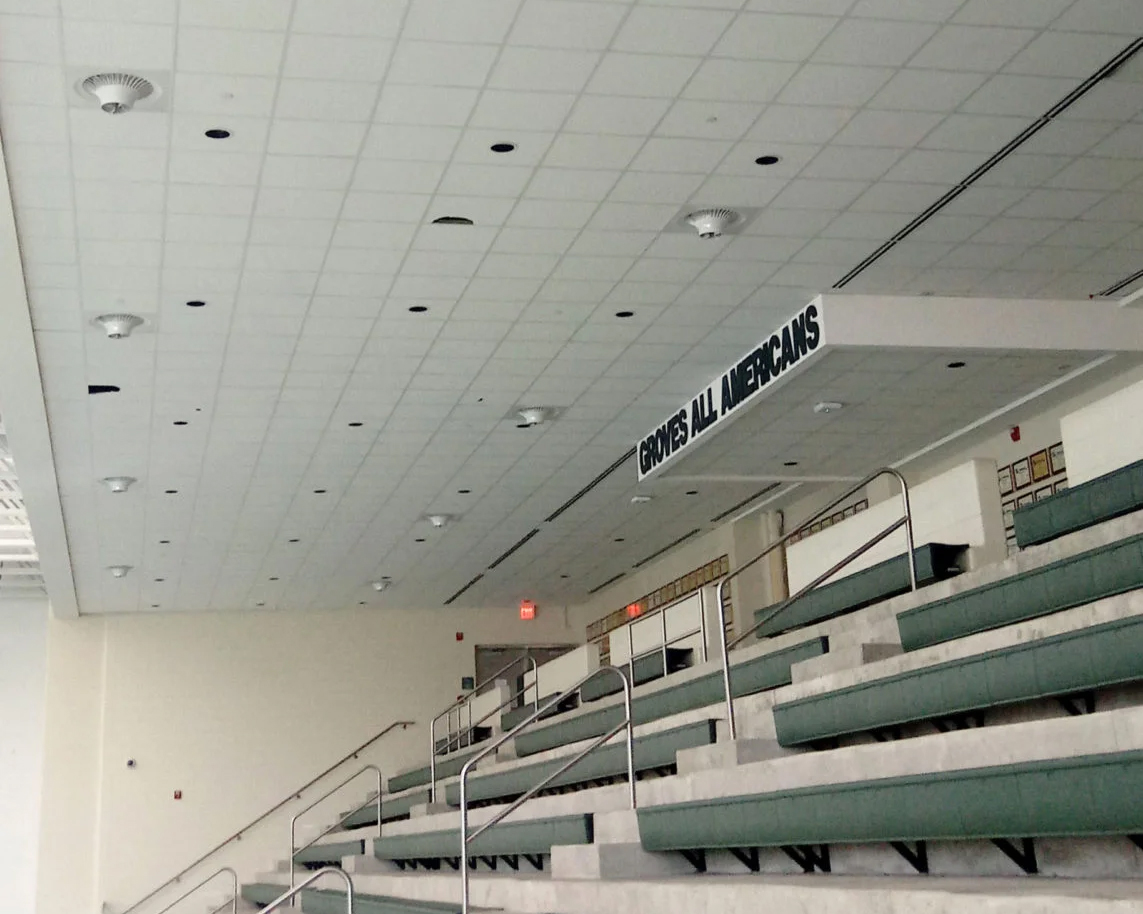
The Q Series EC provides gentle, controlled circulation while being specifically designed for sound-sensitive environments. This makes it well suited for pool halls, leisure areas, spectator spaces, dining areas, and other guest environments where effective air movement is needed without introducing excessive mechanical noise. With variable-speed EC motors and building-control integration, airflow can be adjusted to support the facility's HVAC strategy while minimizing excessive air movement over the water.
Potential Results
A properly engineered Airius installation could help reduce stagnant air near ceilings and roof structures, improve distribution of conditioned air, reduce temperature stratification, support airflow across condensation-prone building surfaces, and help existing HVAC and dehumidification systems manage the large volume of air within an indoor water park more effectively.
Improved circulation may also help reduce conditions that contribute to condensation and moisture-related deterioration while avoiding the energy penalty associated with simply increasing heating, cooling, or dehumidification capacity.
Don't let air quality slide
Every indoor water park has different pools, attractions, ceiling heights, glazing, structural materials, HVAC systems, and dehumidification requirements. Airius fan placement and operating speeds should therefore be engineered around the facility’s existing supply and return-air strategy, with particular attention to condensation-prone surfaces and avoiding excessive airflow directly across pool water.
The objective isn’t simply to circulate humid air. It’s to help the building’s moisture-control system get conditioned air where it needs to go.