
Improving Air Quality and Comfort with Destratification Fans for Hospitals
Hospitals operate around the clock and contain a wide range of environments with very different airflow, temperature, and indoor air-quality demands. Clinics, waiting areas, workshops, corridors, offices, and other occupied spaces can experience odors, stagnant air, uneven temperatures, and high HVAC loads.
Airius systems can help hospitals improve air circulation and indoor environmental conditions while working alongside existing HVAC, filtration, and infection-control strategies.
The Challenge
Hospitals must maintain comfortable, controlled environments for patients, staff, and visitors while managing constant occupancy and substantial mechanical loads. Different areas of a hospital can face very different problems. Waiting and clinic spaces may experience high occupancy and airborne particles. Workshops and support areas can develop odors, dampness, condensation, or uneven temperatures. Large or high-ceiling spaces may also experience thermal stratification, leaving conditioned air concentrated away from the occupied zone.
Beacon Hospital in South Dublin faced several of these issues. The hospital sought a continuous air and surface purification solution that could improve ventilation while addressing odors, mould, dampness, and condensation within its clinics and workshop facilities.
The Airius Solution
Airius systems can provide supplemental air circulation and air treatment in appropriate hospital spaces, helping improve air distribution while complementing existing HVAC and filtration systems.
For hospitals, two Airius systems are particularly well suited.

PureAir Suspended Series
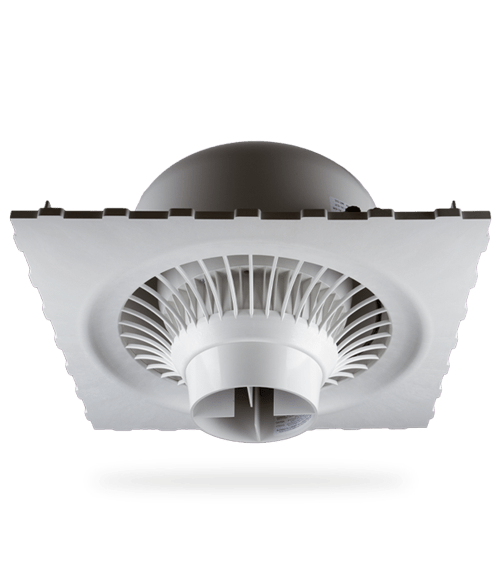
The PureAir Suspended Series combines air circulation with NPBI™ Needlepoint Bipolar Ionization technology in a ceiling-mounted system designed for drop-ceiling environments. It can help mitigate odors, allergens, bacteria, and airborne particles while simultaneously circulating conditioned air to reduce hot and cold spots. Its integrated design makes it particularly well suited for waiting areas, clinics, corridors, administrative spaces, staff areas, and other hospital environments with suspended ceilings.
PureAir Standard Series
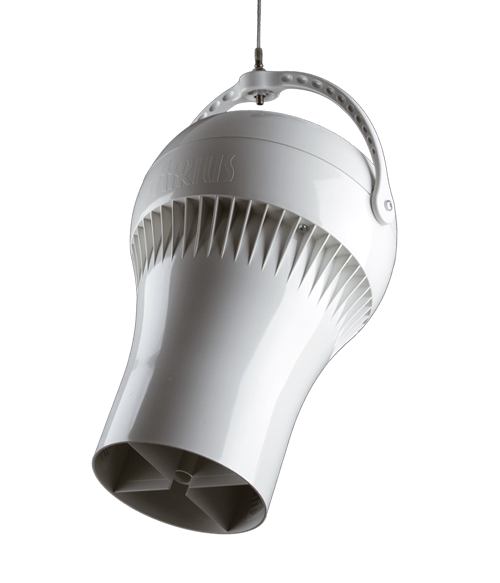
The standard PureAir Series provides greater installation flexibility for clinics, workshops, larger rooms, and spaces without suspended ceilings. The current PureAir system combines Airius' patented circulation technology with NPBI™ to continuously treat and distribute air within the occupied space, helping reduce airborne particles and odors while supporting existing filtration systems.

Potential Benefits
A properly designed Airius PureAir installation could help improve air circulation, reduce airborne particles and persistent odors, minimize hot and cold spots, and create more consistent indoor conditions for patients and staff. Better circulation can also help hospitals make more effective use of conditioned air, potentially reducing unnecessary HVAC demand in appropriate areas while supporting overall comfort.
Proven Results
Beacon Hospital installed Airius PureAir PHI systems in its clinics and workshop facilities after evaluating available purification technologies.
Following installation, the hospital’s Director of Facilities reported that the air felt fresher and more comfortable, problem odors had been eliminated, and heating settings had been reduced, producing additional energy-cost savings. The hospital subsequently planned to expand the installation into additional areas.
The Beacon installation used the earlier PureAir PHI technology, while today’s PureAir Series uses NPBI™ technology, but the project demonstrates how Airius air-circulation and purification systems have already been incorporated into an operating hospital environment.
Get the air out of sick bay
Every hospital has different ventilation requirements, room functions, occupancy patterns, filtration systems, and infection-control protocols. Airius systems can be selected and positioned for appropriate spaces while working alongside the hospital’s existing mechanical and environmental-control infrastructure.
The objective is not to replace required healthcare ventilation or infection-control systems. It is to help create cleaner, more comfortable, and more effectively conditioned spaces throughout the facility.

