Fitness

Indoor Pools

destratification fans for indoor pools

Improving Air Quality and Comfort with Destratification Fans for Indoor Pools

Indoor pools and natatoriums present a unique air-management challenge. Warm water continuously releases moisture into the space, while chlorine byproducts can accumulate near the pool surface where swimmers, coaches, lifeguards, and spectators breathe.

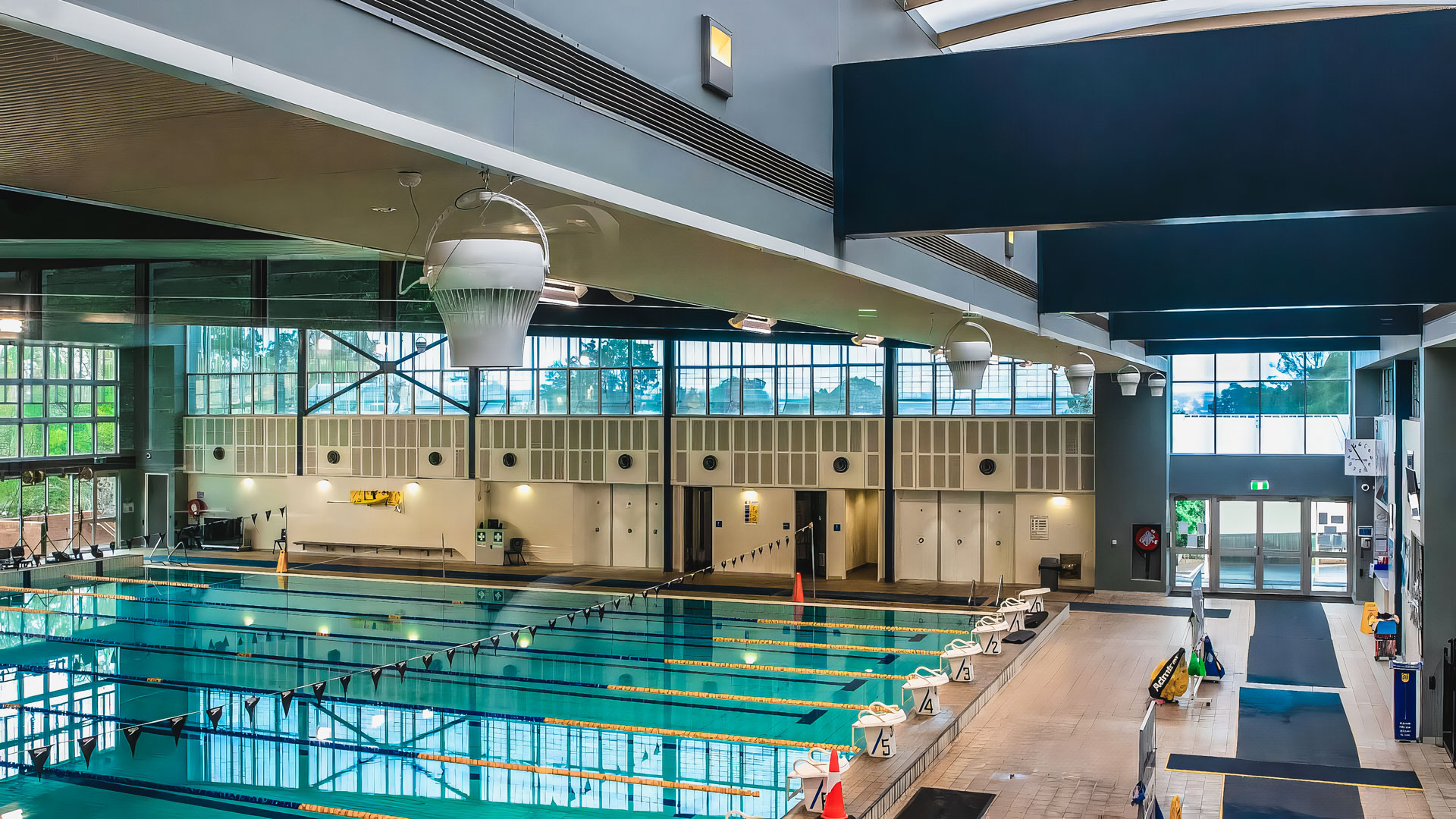
High ceilings can make the problem worse by allowing temperature stratification and uneven air circulation to develop throughout the facility. Airius destratification fans can help improve air distribution, reduce stagnant zones, and support the existing HVAC and dehumidification system in maintaining a more consistent indoor environment.

Challenge

The Challenge

Indoor pool air quality depends on getting conditioned air to the right places, particularly the pool deck and water surface.

Chloramines form when chlorine reacts with substances introduced by swimmers and can off-gas into the surrounding air. Because chloramine-contaminated air can concentrate near the water surface, inadequate circulation can lead to eye and respiratory irritation for swimmers and staff. The CDC recommends moving fresh air across the water surface toward exhaust locations to prevent this buildup.

ASHRAE specifically identifies high ceilings, temperature stratification, and areas without adequate air turnover as potential indoor-air-quality problems in natatoriums. Poor air distribution can also contribute to condensation and expose building components to moisture and corrosive chloramine compounds.

Simply increasing ventilation or dehumidification capacity does not necessarily solve the problem if conditioned air is not reaching the areas where it is needed.

Solution

The Airius Solution

Airius fans can provide strategically controlled circulation throughout indoor pool environments, helping move air through stagnant areas and support the facility’s intended supply and exhaust pathways.

Fan placement and speed are designed around the existing HVAC system so circulation improves air distribution without creating excessive velocity across the water surface, which can increase evaporation.

For indoor pools, two Airius systems are particularly well suited.

Air Pear Series

Air Pear EC Series

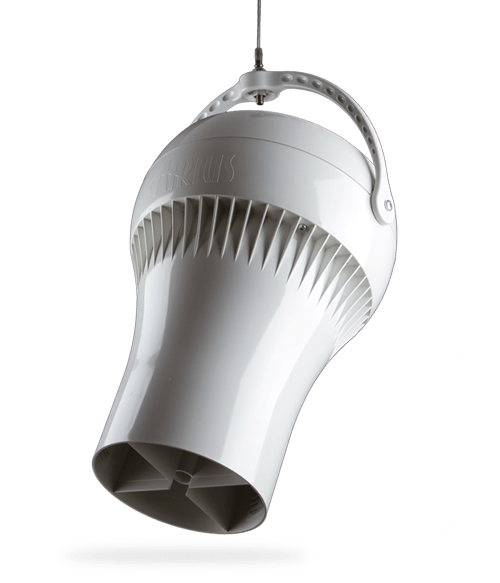
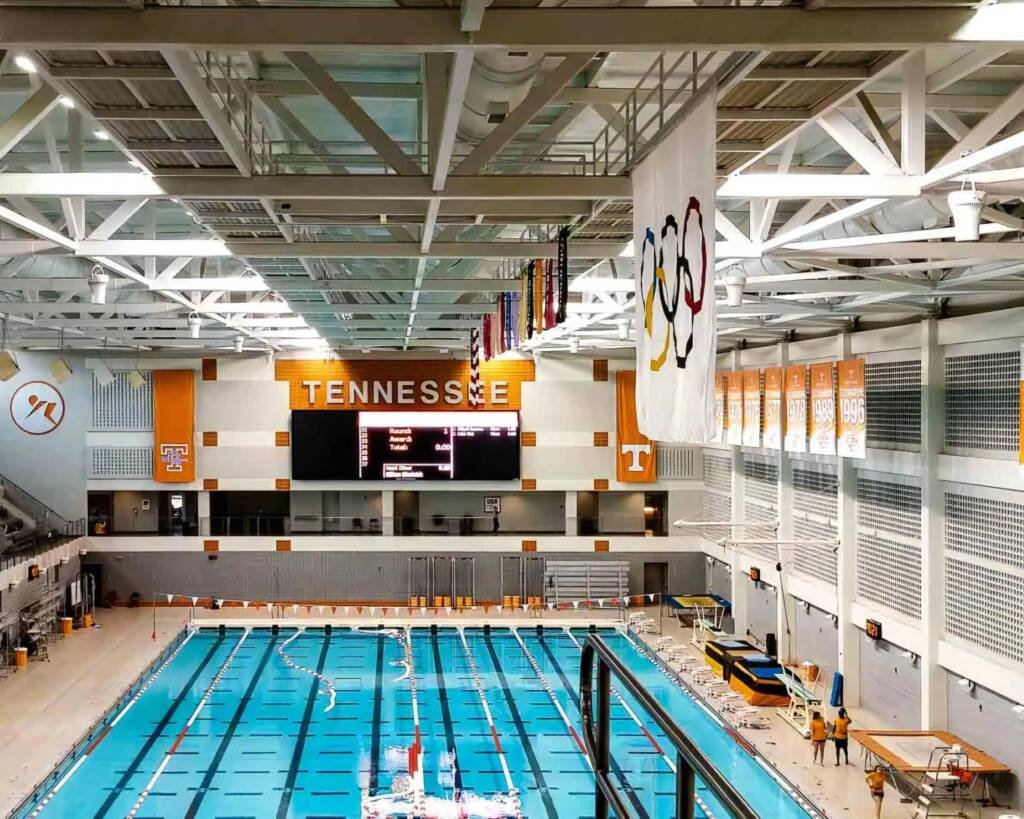
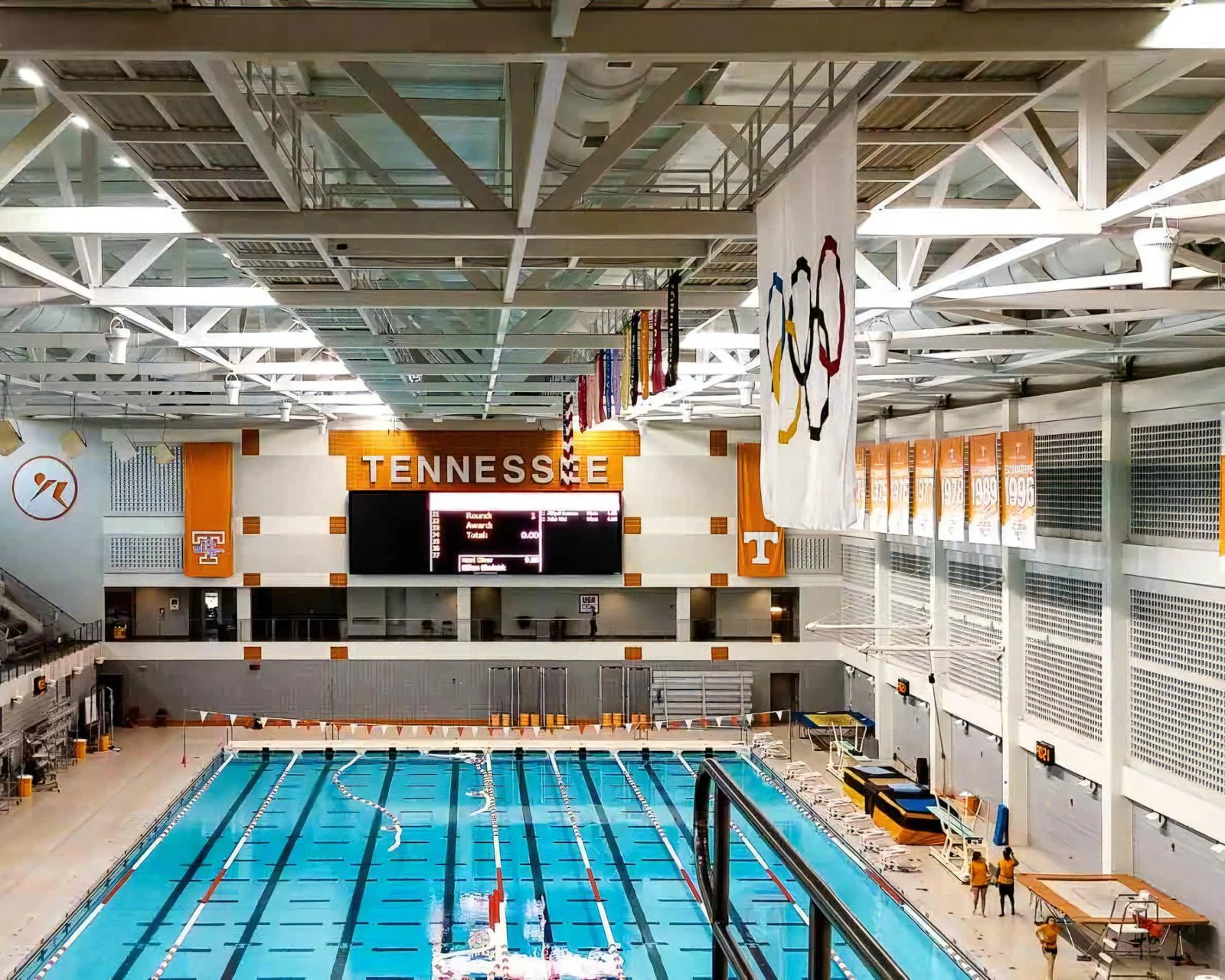
The Air Pear EC Series is the primary recommendation for larger natatoriums and is the system proven at the University of Tennessee's W. Allen Jones Intercollegiate Aquatic Center. Its focused, long-throw airflow can help move upper-level air into circulation and improve air movement at deck and pool level. Multiple models accommodate high ceilings, while EC motors provide variable-speed operation and integration with BACnet or 0–10V building controls. Air Pear housings are also available with chemical-resistant options for demanding environments such as indoor pools.
Q Series

Q EC Series

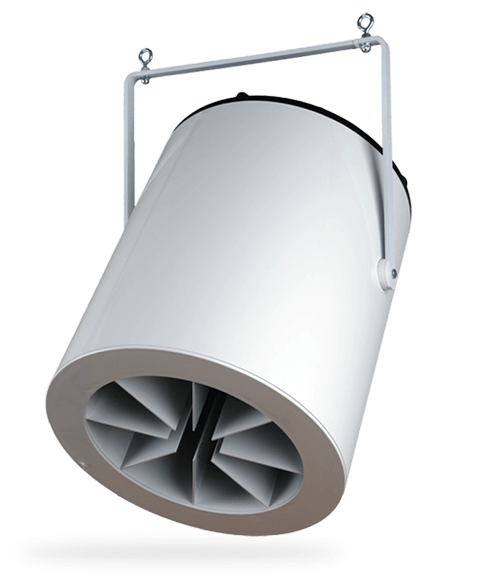
The Q Series EC is particularly well suited for natatoriums where quiet operation and resistance to the pool environment are important. The Q Series combines gentle destratification with a specialized motor mounting system designed to reduce noise. Its ABS housing provides chemical resistance, and Airius specifically identifies natatoriums among the harsh or corrosive environments where the housing can be used. With EC motor controls and coverage for spaces with ceilings up to 50 feet, the Q Series can provide controlled circulation without overwhelming the acoustic environment around competition, instructional, or recreational pools.
Benefits

Potential Benefits

A properly engineered Airius installation could help reduce stagnant air near the water surface and deck, improve distribution of conditioned air, reduce temperature stratification, support movement of chloramine-laden air toward exhaust pathways, and help existing HVAC and dehumidification systems operate more effectively. Improved circulation may also help reduce conditions that contribute to condensation and corrosion by helping conditioned air reach vulnerable building surfaces and preventing moisture-laden air from remaining stagnant.

Results

Proven Results

The University of Tennessee’s W. Allen Jones Intercollegiate Aquatic Center experienced increased chloramine levels near the pool surface during heavily attended swim events. The existing HVAC system was unable to adequately circulate the air, and corrosive chloramines were visibly affecting stainless-steel fixtures around the pool.

Airius designed a system using 12 Air Pear 60-EC fans positioned above the lap and dive pools and divided into multiple control zones. The EC fans were integrated with the facility’s existing building controls to provide targeted circulation according to operating conditions.

Following installation, the university reported noticeably improved air quality at deck level during high-traffic events and effective mitigation of the chloramine problem. Facility staff also reported significant improvement in the overall atmosphere of the aquatic center.

Enhancing Aquatic Center Air Quality

Don't let bad air quality pool around your swimmers

Every indoor pool has different ceiling heights, water temperatures, bather loads, glazing, exhaust locations, dehumidification systems, and air-quality requirements. Airius fan placement and operating speeds can be designed around those conditions to improve circulation while complementing the facility’s existing ventilation, exhaust, humidity-control, and pool-water management systems.

The objective isn’t simply to move more air. It’s to get clean, conditioned air where swimmers and staff actually need it.

Go with the flow

Sign up for our monthly newsletter and be the first to hear about new products, the latest news, and more!