
Improve Environmental Control with Destratification Fans for Research & Diagnostic Labs
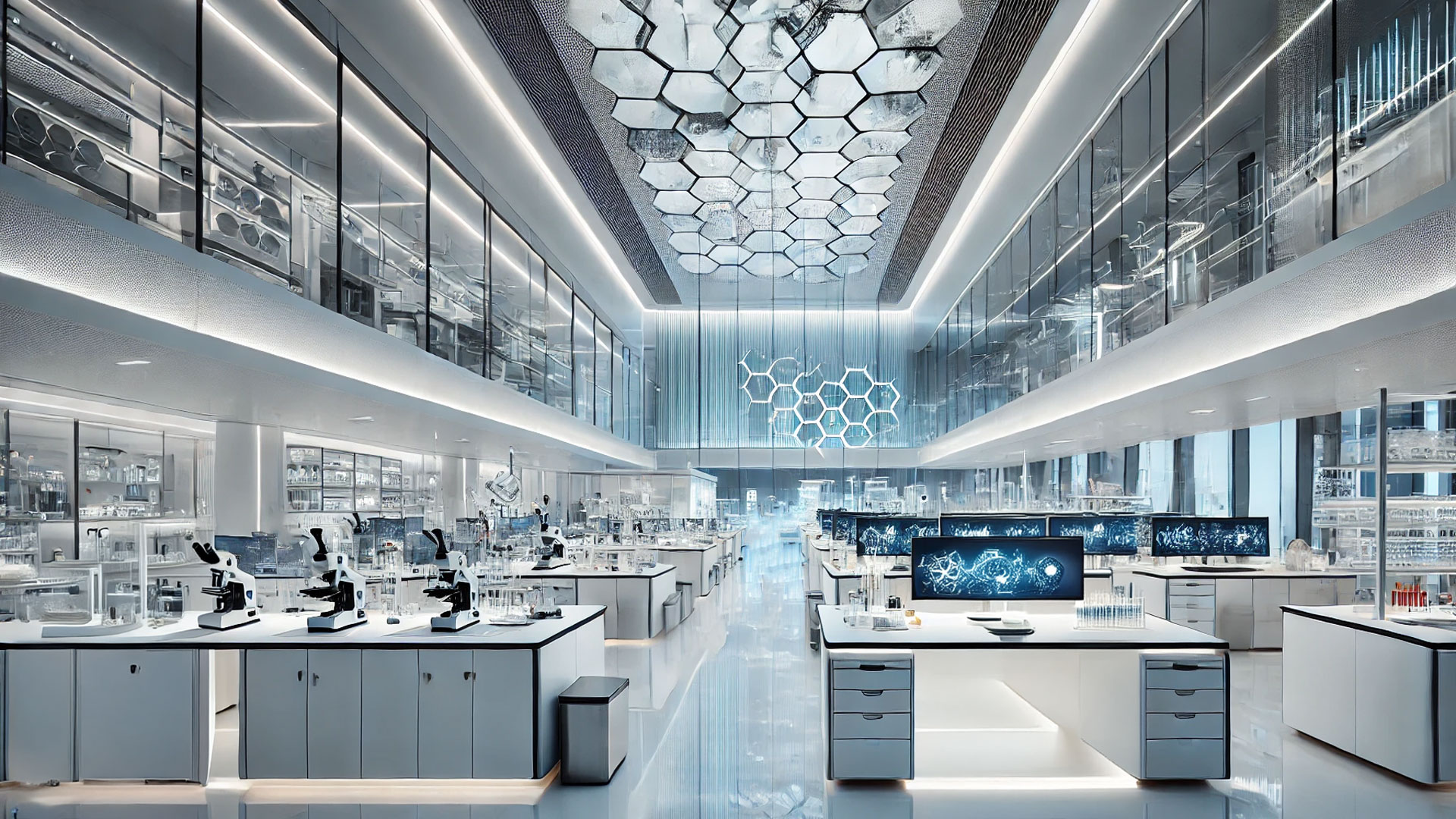
Research and diagnostic laboratories depend on controlled indoor conditions to protect sensitive equipment, support reliable processes, and provide comfortable working environments for laboratory personnel.
Equipment, refrigeration systems, lighting, computers, and analytical instruments can generate substantial heat throughout the day. In appropriate laboratory and support spaces, strategically managed air circulation can help address temperature inconsistencies and support the performance of existing HVAC systems.
The Challenge
Laboratories often combine high internal heat loads with demanding ventilation requirements. Heat-producing equipment can create localized warm areas, while conditioned air may not distribute evenly throughout larger rooms, equipment areas, storage spaces, and laboratories with higher ceilings.
At the same time, laboratory airflow must be carefully controlled. Fume hoods, biological safety cabinets, pressure relationships, containment systems, and other specialized ventilation equipment depend on predictable airflow patterns. When temperature problems occur, simply increasing HVAC output can increase energy consumption without necessarily addressing the underlying air-distribution problem.
The Airius Solution
Airius fans can provide strategically controlled air movement to complement existing data center cooling infrastructure. Rather than simply increasing airflow throughout the room, Airius fans can be positioned and controlled to help address areas of heat accumulation and support the facility’s intended return-air strategy without compromising hot aisle/cold aisle separation.
For data center applications, two Airius systems are particularly well suited.

PureAir Suspended Series
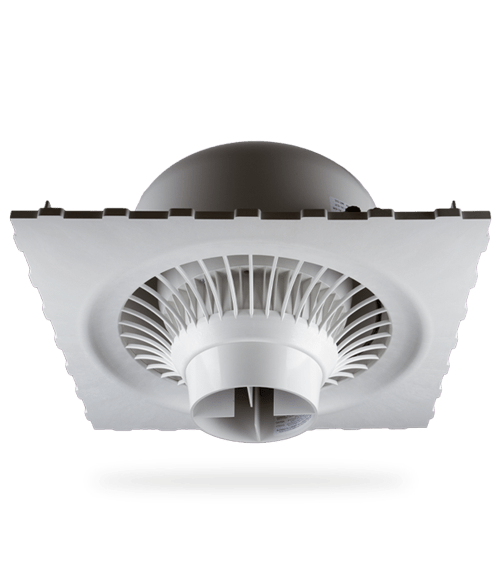
The PureAir Suspended Series combines air circulation with NPBI™ Needlepoint Bipolar Ionization technology in a ceiling-mounted system designed for drop-ceiling environments. In addition to helping eliminate hot and cold spots, the system is designed to mitigate odors, allergens, bacteria, and airborne particles, making it particularly relevant for laboratory and diagnostic spaces where indoor air quality is an important consideration.
Air Pear EC Series
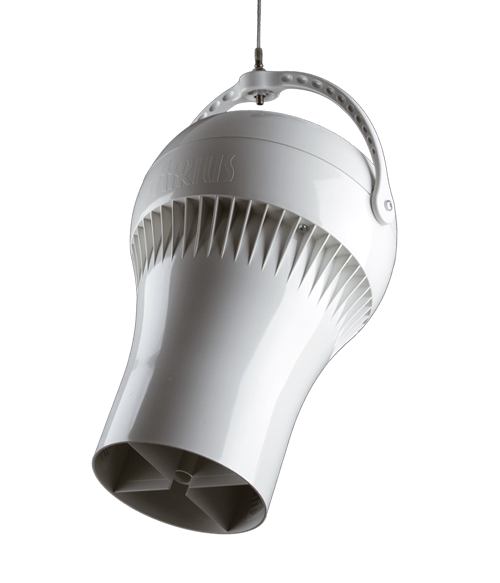
For larger laboratories, equipment rooms, research areas, storage spaces, and facilities without suspended ceilings, the Air Pear EC Series provides greater flexibility in ceiling height and coverage. Its focused columnar airflow, variable-speed EC motors, and building-management integration allow airflow to be introduced strategically where temperature differences or heat accumulation are occurring. Different models can be selected according to ceiling height and room size

Potential Results
A properly engineered Airius installation could help reduce localized temperature variations, improve circulation around heat-generating equipment, reduce ceiling-level heat accumulation, support more consistent working conditions, and complement existing laboratory HVAC systems.
Improved air distribution may also allow facilities to address certain temperature problems without relying solely on increased mechanical heating or cooling.
Research better airflow no further
No two laboratories have the same equipment loads, ventilation requirements, room configurations, or containment needs.
Airius can work with facility teams to determine where supplemental air circulation is appropriate and position fans so they complement existing HVAC systems without interfering with fume hoods, biological safety cabinets, clean environments, pressure relationships, or other critical airflow controls.