
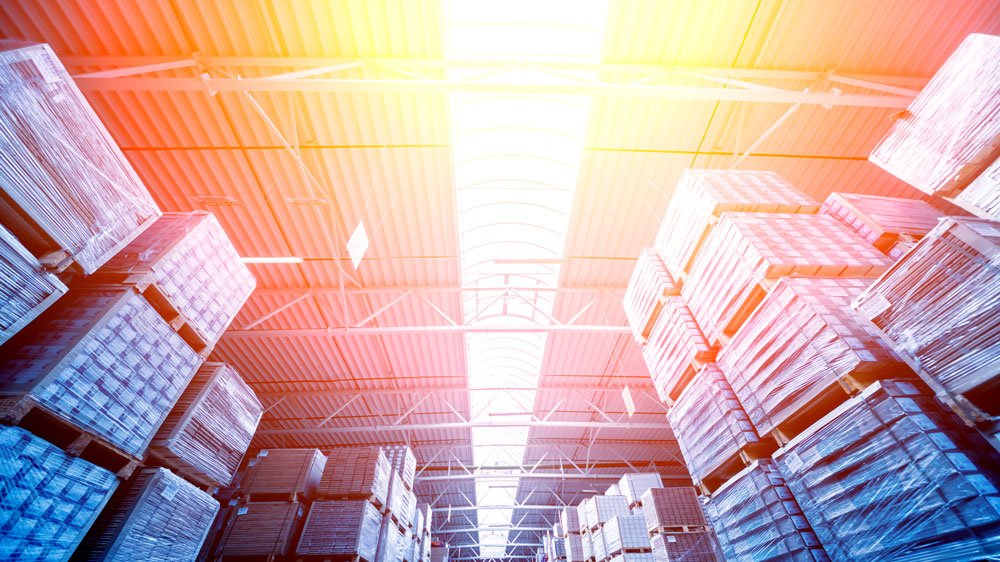
When facility managers think about temperature issues, the first concern is often comfort. Employees complain about hot and cold spots, customers notice certain areas feel warmer than others, or one part of the building never seems to reach the desired temperature.
But uneven temperatures can impact much more than comfort. Across a wide range of industries, temperature inconsistencies can affect productivity, operations, inventory, customer experience, and overall business performance.
Understanding these hidden costs can help facilities identify problems before they become expensive consequences.
Employee Productivity and Workplace Comfort
Temperature is one of the most common workplace complaints. When employees are consistently too hot or too cold, it can affect concentration, increase distractions, and create dissatisfaction with the work environment.
Large facilities often experience significant temperature differences between work areas, particularly in buildings with high ceilings or large open floor plans. While the thermostat may indicate a comfortable setting, employees in certain areas may experience completely different conditions.
Maintaining more consistent temperatures throughout a building helps create a more comfortable environment for employees and supports day-to-day operations.
Customer Experience in Retail and Public Spaces
Temperature can influence how customers experience a space.
Retail stores, grocery stores, fitness centers, and other public facilities rely on creating comfortable environments that encourage customers to spend time in the building. If certain areas feel noticeably warmer or colder than others, it can negatively affect the overall experience.
While customers may not always identify temperature as the problem, they often notice when a space feels uncomfortable.
Inventory Protection in Temperature-Sensitive Facilities
For facilities that store temperature-sensitive products, consistency is critical.
Pharmaceutical warehouses, healthcare supply distributors, food storage facilities, and other specialized environments often have strict temperature requirements. Temperature fluctuations can create operational challenges, compliance concerns, and product quality risks.
Even minor temperature inconsistencies can become significant issues when inventory must be maintained within specific environmental conditions.
Product Quality and Manufacturing Operations
Many manufacturing processes depend on maintaining stable operating conditions.
Temperature fluctuations can affect production environments, equipment performance, and quality control efforts. While requirements vary by industry, maintaining consistent environmental conditions is often an important part of operational reliability.
Facilities that experience significant temperature variation may find it more difficult to maintain uniform conditions throughout the production process.
Higher Operating Costs
Uneven temperatures frequently cause HVAC systems to work harder than necessary.
When one area of a building remains uncomfortable, thermostats are often adjusted in an attempt to solve the problem. This can increase HVAC runtime without addressing the underlying issue.
As a result, facilities may consume more energy while still struggling with comfort complaints and temperature inconsistencies.
Why Do Uneven Temperatures Occur?
Many temperature issues are not caused by a lack of heating or cooling capacity. Instead, they result from how air moves throughout the building.
In facilities with high ceilings, large open spaces, or complex layouts, conditioned air does not always reach every area evenly. Warm air can accumulate overhead, while occupied spaces experience different conditions than intended.
Over time, these airflow imbalances create the hot and cold spots that facility managers encounter every day.
Looking Beyond the Thermostat
When temperature problems arise, adding more heating or cooling is not always the answer.
Before investing in larger HVAC systems or increasing energy usage, it is often worthwhile to evaluate how air is being distributed throughout the building. Improving air circulation and temperature consistency can help facilities create more comfortable environments while supporting operational goals.
Whether the concern is employee comfort, inventory protection, customer experience, or operating costs, maintaining consistent temperatures throughout a building is an important part of overall facility performance.
Learn More About Airflow Solutions for Commercial Buildings
If your facility experiences ongoing temperature inconsistencies, airflow distribution may be contributing to the problem.
Talk with our team about your facility:
Learn more about Airius solutions: