Improving Temperature Control and Heating Efficiency with Destratification Fans for Aircraft Hangars
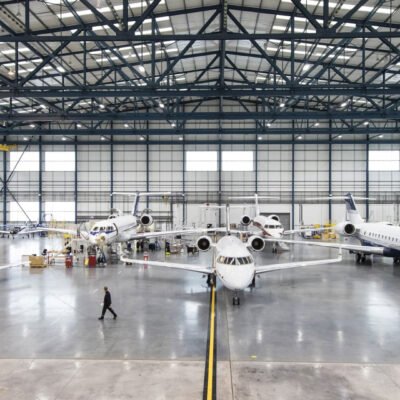
Aircraft hangars contain enormous volumes of air beneath high ceilings, making them particularly vulnerable to thermal stratification. During colder months, heated air naturally rises into the roof space while technicians and maintenance crews remain at floor level.
Large hangar doors create an additional challenge. Each opening can introduce a significant volume of cold outside air, leaving heating systems to recover conditions across an extremely large space. Airius destratification fans can help redistribute heat already within the building, improve temperature consistency, and reduce unnecessary demand on existing heating systems.
The Challenge
Heating an aircraft hangar effectively is not simply a matter of installing enough heating capacity. High ceilings allow large quantities of warm air to accumulate far above the occupied working zone. The heating system may continue operating because thermostats at floor level have not reached their setpoint, even though substantial heat is already trapped near the roof.
British Airways experienced this problem in its aircraft hangar at London Heathrow Airport. Significant thermal stratification left floor-level working areas considerably cooler than the upper portions of the building, resulting in uncomfortable conditions for engineers and inefficient energy use.
The same underlying problem occurred at Gama Aviation’s engineering hangar at Farnborough Airport. Two large heating units operated continuously but were still unable to reach the facility’s 14°C thermostat setpoint because heat was accumulating near the ceiling instead of remaining within the occupied zone.
The Airius Solution
Airius destratification fans can continuously return accumulated ceiling-level heat toward the hangar floor, helping create more consistent temperatures throughout the occupied working environment. Because Airius fans produce focused vertical airflow rather than relying on very large rotating blades, systems can be positioned around aircraft clearances, maintenance equipment, lighting, cranes, and other overhead infrastructure.
For aircraft hangars, two Airius systems are particularly well suited.

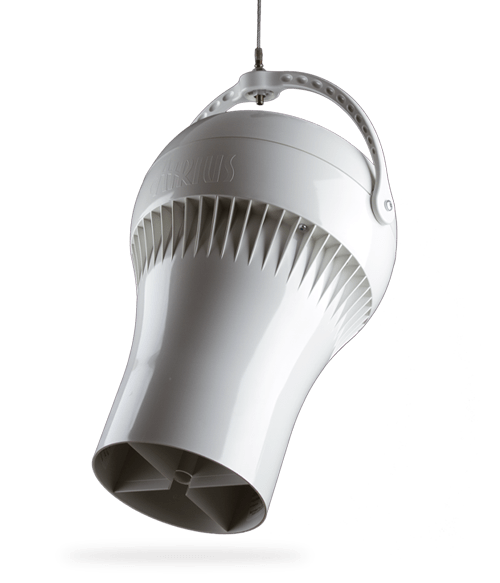
Air Pear EC Series
The Air Pear EC Series is the primary recommendation for aircraft hangars and is specifically identified by Airius for aviation applications. Multiple models accommodate ceiling heights from approximately 15 to 100 feet, making the series suitable for everything from smaller maintenance hangars to very large aviation facilities. Its focused columnar airflow helps return accumulated ceiling heat toward the working zone, while variable-speed EC motors allow circulation to be adjusted according to building conditions. BACnet and 0–10V integration also allow the fans to operate alongside existing building-management systems. Air Pear systems have been successfully installed in both the British Airways and Gama Aviation hangars.
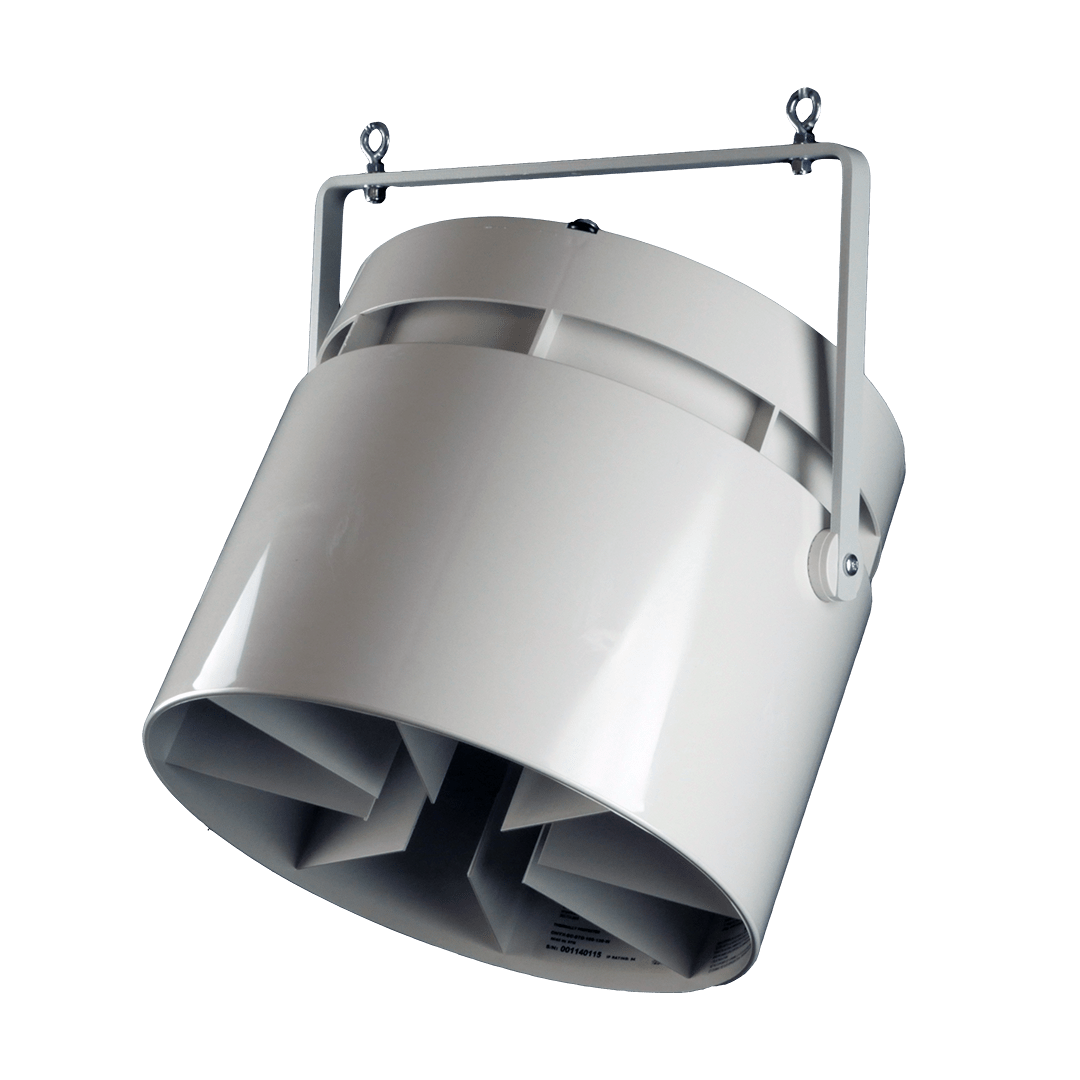
Onyx EC Series
The Onyx EC Series provides another option for maintenance hangars, service bays, workshops, and aviation facilities where stronger circulation or supplemental cooling is required. Designed for powerful air circulation in large spaces, standard Onyx EC models can provide coverage up to approximately 2,000 square feet in facilities with ceilings up to 50 feet. Variable-speed EC motors allow airflow to be adjusted for seasonal conditions, maintenance activity, and occupancy while providing an additional cooling-focused option during warmer periods.
Potential Benefits
A properly engineered Airius installation could help reduce floor-to-ceiling temperature differences, improve comfort for maintenance personnel, shorten heating recovery periods, and reduce unnecessary heater runtime. By returning heat that would otherwise remain trapped near the roof, hangars may also be able to reach thermostat setpoints with less heating capacity and maintain those conditions more efficiently.
Improved circulation can be particularly valuable after large hangar doors are opened, when the heating system must restore comfortable working conditions across a very large volume of space.
Proven Results
British Airways installed 12 Airius Air Pear Series fans in its aircraft hangar at London Heathrow Airport to address significant temperature stratification. The fans were strategically positioned throughout the hangar to circulate warm ceiling-level air back toward the occupied zone while minimizing energy consumption and disruption to maintenance operations.
Following installation, British Airways reported that temperature stratification had been eliminated and temperatures throughout the hangar became significantly more consistent.
The improved air distribution enhanced working conditions for engineers and maintenance personnel while reducing demand on the existing heating system and producing energy savings
Don't get hung up on high energy costs
Every aircraft hangar has different ceiling heights, aircraft clearances, door configurations, heating systems, maintenance equipment, and overhead infrastructure. Airius systems can be selected and positioned around those conditions, with fan placement coordinated around aircraft operations, cranes, lighting, fire-protection systems, exhaust ventilation, and other critical equipment.
The objective isn’t simply to generate more heat. It’s to bring the heat already inside the hangar back down to where people are working.