Improving Climate Control and Energy Efficiency with Destratification Fans for Museums & Art Galleries
Museums and art galleries have to balance two equally important environmental needs. Visitors need comfortable indoor conditions, while collections may depend on stable temperature, humidity, and airflow to support long-term preservation.
High ceilings, historic architecture, large exhibition halls, glazing, changing occupancy, and strict environmental requirements can make that balance difficult and expensive to maintain. Airius destratification fans can help improve air distribution and temperature consistency while allowing existing HVAC systems to make better use of the conditioned air they already produce.
The Challenge
Environmental consistency is particularly important in museums because temperature and relative humidity can affect sensitive collections. ASHRAE identifies temperature, relative humidity, air movement, filtration, and even distribution throughout collection spaces as important elements of museum HVAC design. It also notes that high-ceiling and multistory spaces can develop stratification, producing warmer conditions near ceilings and cooler conditions closer to the floor. Circulation fans can be used as a low-impact method of improving air mixing and reducing these temperature differences.
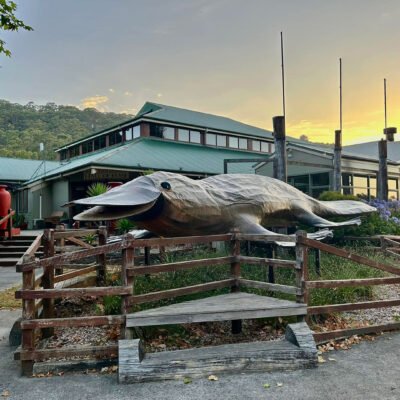
That creates an energy challenge as well. A museum may already have sufficient heating or cooling capacity, but if conditioned air collects above the occupied and exhibition zones, the HVAC system can continue operating unnecessarily. The Axeman’s Hall of Fame in Tasmania experienced exactly this problem. Despite operating five heating units, the approximately 400-square-metre museum remained uncomfortable during winter because its eight-metre-high roof allowed heated air to accumulate overhead.
The Airius Solution
Airius fans can provide controlled circulation throughout museums and galleries, helping reduce temperature stratification while complementing existing environmental-control systems.
For museums and art galleries, two Airius systems are particularly well suited.

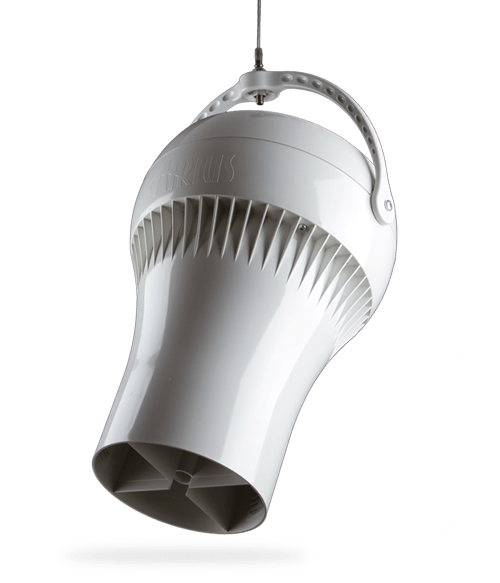
Air Pear EC Series
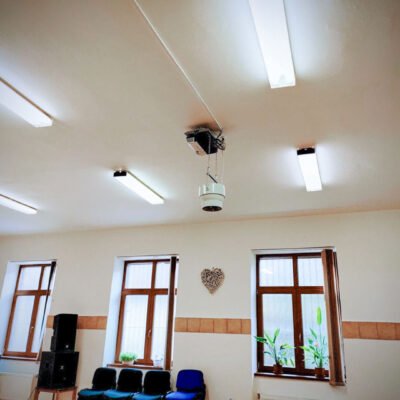
The Air Pear EC Series provides an effective solution for large galleries, exhibition halls, museum storage areas, and other high-ceiling spaces. Its focused columnar airflow helps return conditioned air from upper portions of the building toward occupied levels, reducing temperature differences throughout the room. Multiple models accommodate a wide range of ceiling heights, while variable-speed EC motors allow airflow to be carefully adjusted according to the requirements of the space. BACnet and 0–10V integration also allow the system to operate alongside existing museum environmental controls rather than independently of them. The Air Pear Series is the solution proven at the Axeman's Hall of Fame.
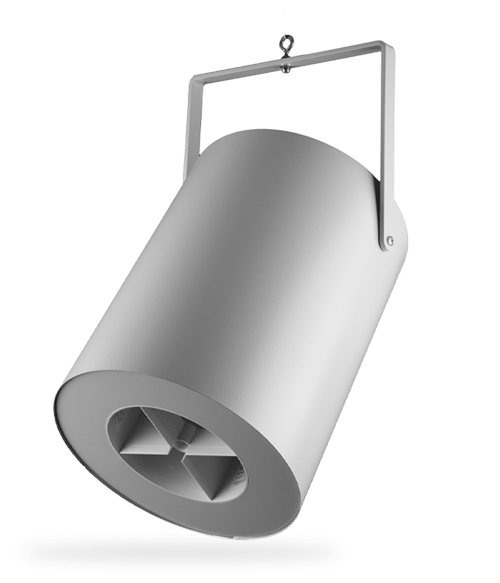
Designer EC Series
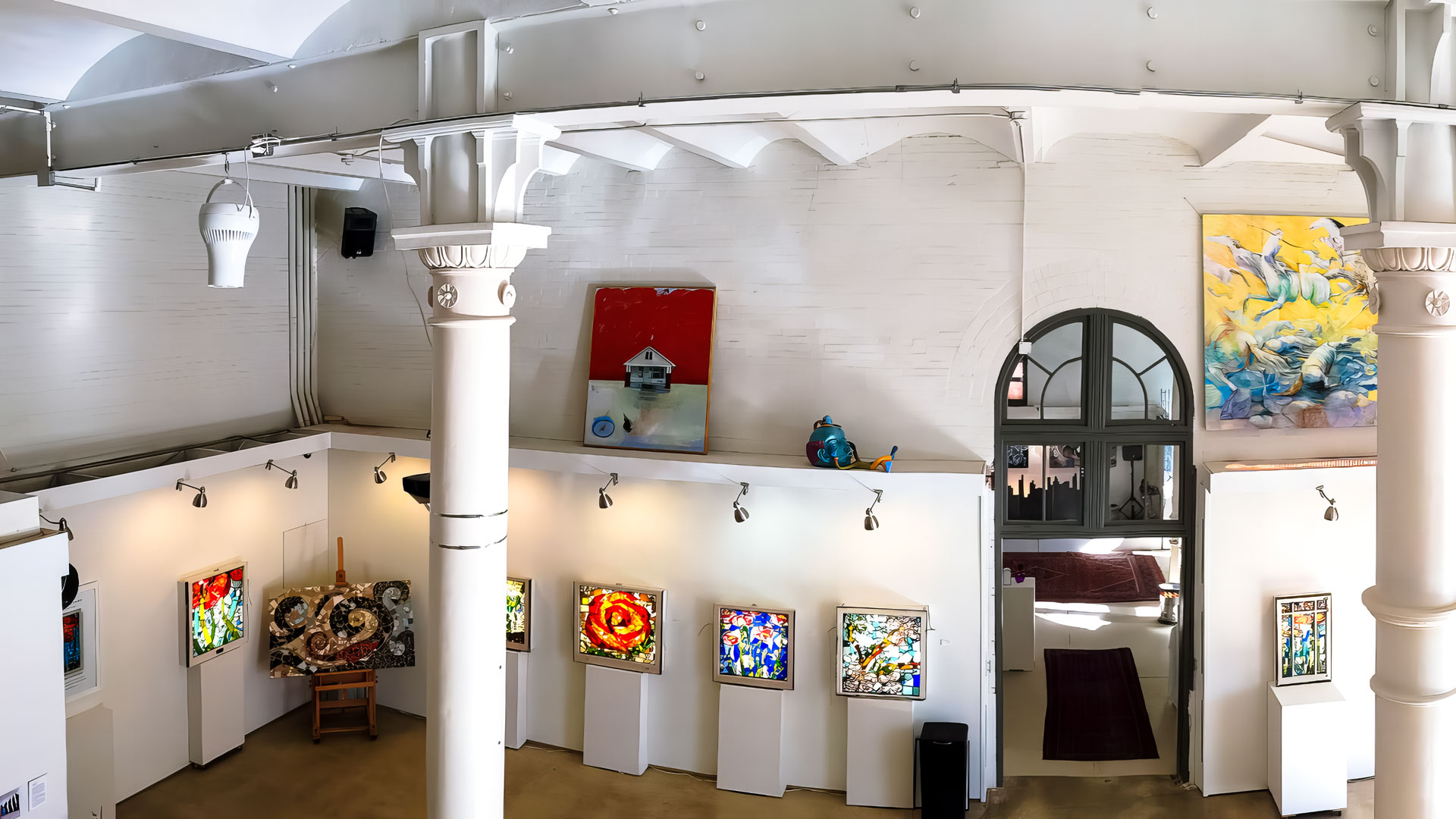
The Designer EC Series is particularly well suited for galleries, historic museums, atriums, entrance halls, and architecturally significant spaces where mechanical equipment needs to remain visually unobtrusive. Its powder-coated aluminum housing can be customized to complement the surrounding architecture while providing the same focused Airius airflow technology. Models are available for ceilings ranging from approximately 8 to 125 feet, making the Designer Series suitable for everything from individual galleries to large museum atriums.
Potential Benefits
A properly engineered Airius installation could help reduce floor-to-ceiling temperature differences, improve environmental consistency throughout galleries, reduce ceiling-level heat accumulation, improve visitor comfort, and help HVAC systems distribute conditioned air more effectively. More uniform circulation can also help reduce localized environmental differences within large exhibition spaces. The Smithsonian Museum Conservation Institute notes that continuous airflow and the prevention of rapid environmental fluctuations are important considerations in museum climate management.
Fan placement and speed should be coordinated with conservation requirements so airflow supports the overall environmental strategy without directing excessive air movement onto sensitive objects, display cases, or collections.
Proven Results
The Axeman’s Hall of Fame in Latrobe, Tasmania had struggled with uncomfortable winter conditions for years despite having substantial heating capacity.
With an approximately eight-metre-high roof, heated air rose into the upper portion of the museum instead of remaining where visitors and staff could benefit from it. Five heating units were operating, yet customers continued to complain about cold conditions.
Four Airius Model 25 Air Pear fans were installed within the roof zone to continuously return accumulated heat toward floor level. Within two days, the temperature had become consistent enough that the museum was able to shut down three of its five heating units. Heating use was reduced by 60%, while visitors and staff experienced more consistent and comfortable conditions throughout the building.
Put Better airflow on display
Every museum and gallery has different collections, environmental specifications, ceiling heights, architecture, HVAC systems, display configurations, and preservation requirements. Airius systems can be selected, positioned, and controlled around those conditions, using Air Pear fans where efficient destratification is the priority and Designer Series fans where environmental performance must also respect the architecture of the space.
The objective isn’t simply to maintain the temperature at the thermostat. It’s to create more consistent conditions throughout the environment the collection and its visitors actually occupy