Improving Comfort and Energy Efficiency with Destratification Fans for Universities & Higher Education
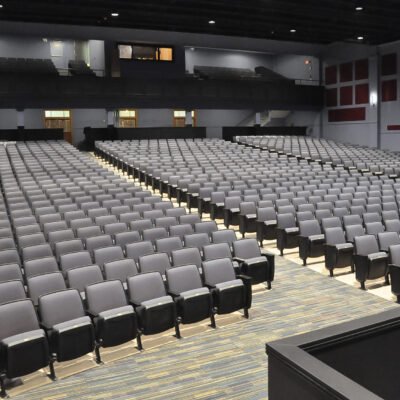
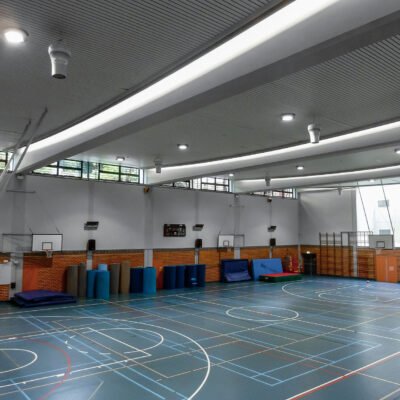
Universities and higher education campuses contain an unusually diverse mix of buildings, from lecture halls and classrooms to libraries, laboratories, recreation centers, student unions, auditoriums, residence halls, and large athletic facilities.
Each space presents different occupancy patterns, ceiling heights, heat loads, and HVAC demands. Airius destratification fans can help universities improve air distribution, maintain more consistent temperatures, and make better use of existing heating and cooling systems across a variety of campus environments.
The Challenge
University buildings rarely operate under consistent conditions. Lecture halls may shift from empty to fully occupied several times each day. Libraries and student centers operate for extended hours. Auditoriums, gymnasiums, and athletic facilities contain large volumes of air beneath high ceilings, while older campus buildings may rely on HVAC systems designed long before current occupancy and energy-efficiency expectations.
In high-ceiling spaces, conditioned air can collect overhead rather than remaining where students, faculty, and staff actually need it. Temperature stratification can create uncomfortable hot and cold zones while forcing HVAC systems to operate longer to maintain thermostat settings.
Universities are also under increasing pressure to reduce building energy consumption and make better use of existing infrastructure without undertaking major mechanical renovations across an entire campus.
The Airius Solution
Airius fans provide targeted air circulation that can be adapted to the very different environments found throughout a university campus.
By redistributing conditioned air and reducing temperature stratification, Airius systems can help existing HVAC equipment maintain more consistent conditions without requiring extensive ductwork modifications.
For universities and higher education facilities, two Airius systems are particularly well suited.

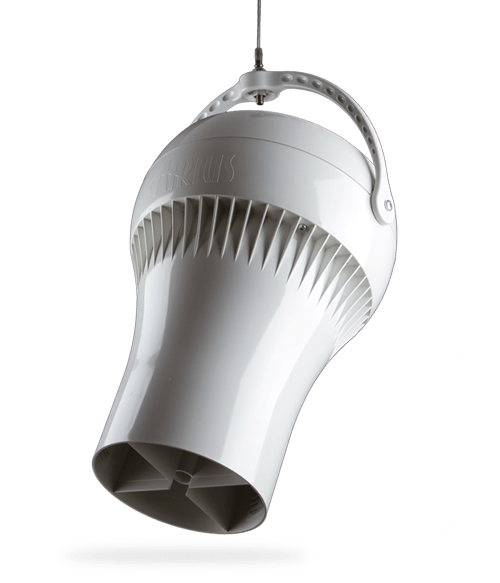
Air Pear EC Series
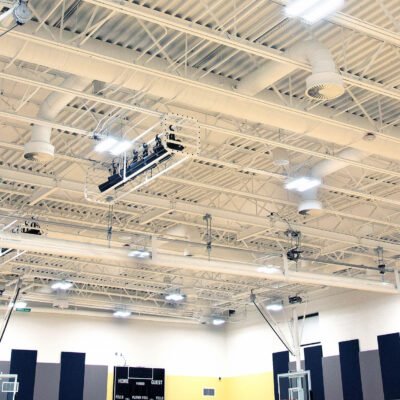
The Air Pear EC Series provides a flexible solution for lecture halls, libraries, gymnasiums, student centers, maintenance facilities, laboratories, and other campus buildings with varying ceiling heights. Multiple models accommodate spaces ranging from approximately 15 to 100 feet high. Focused columnar airflow helps move conditioned air from ceiling level back toward occupied areas, while variable-speed EC motors allow operation to be adjusted according to occupancy, season, and building conditions. BACnet and 0–10V integration also allow Air Pear EC fans to become part of a university's existing building automation strategy.
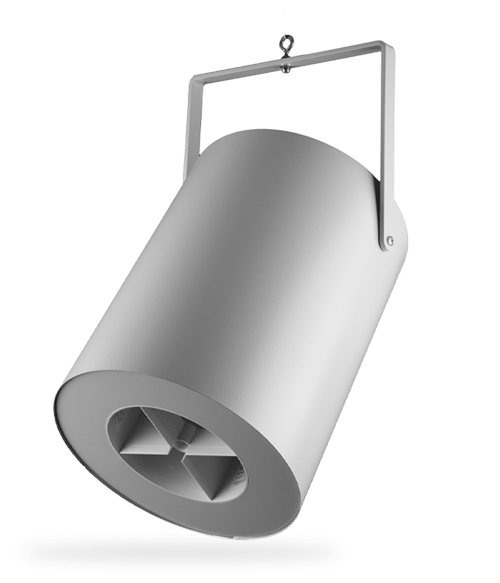
Designer EC Series
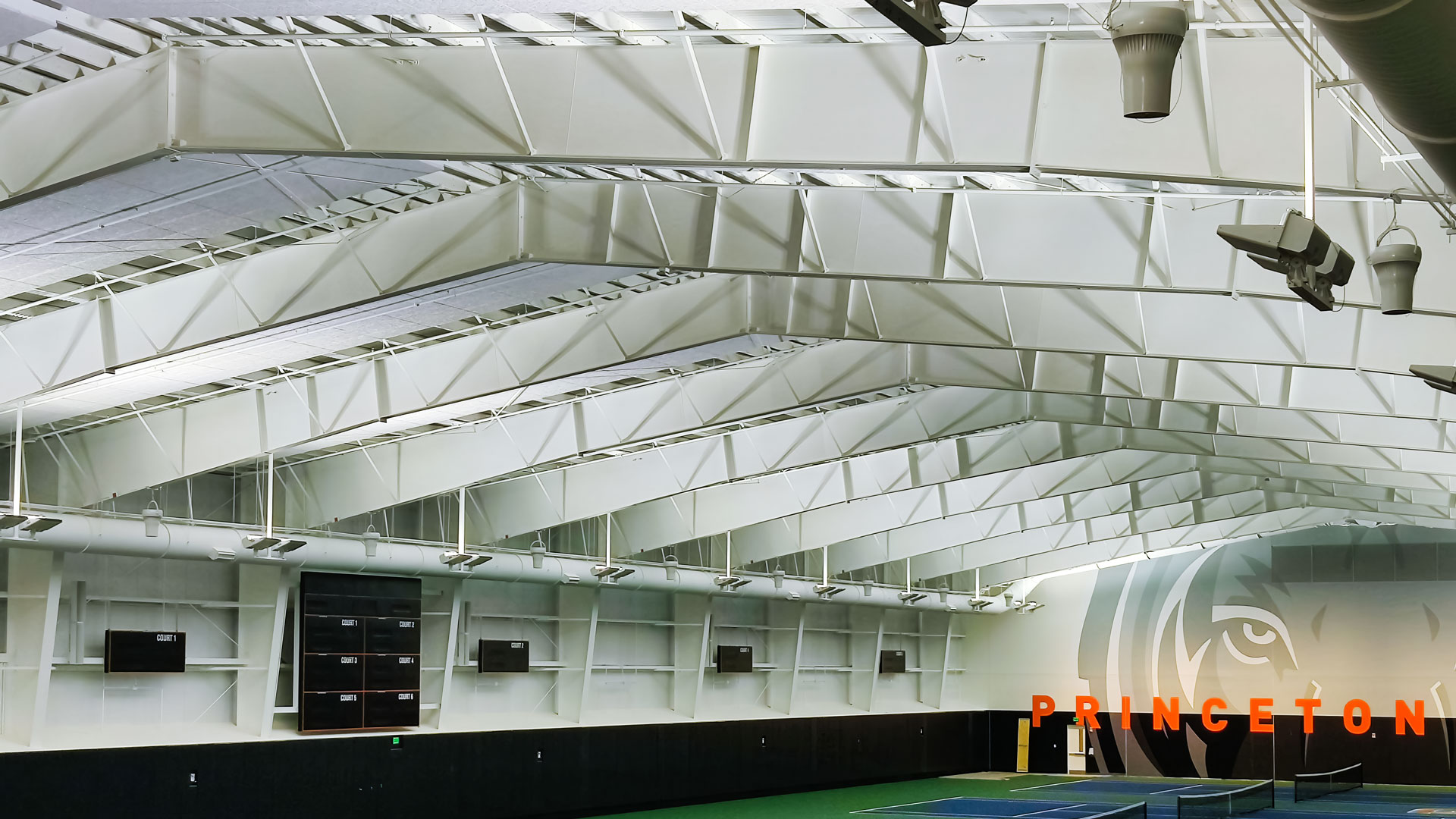
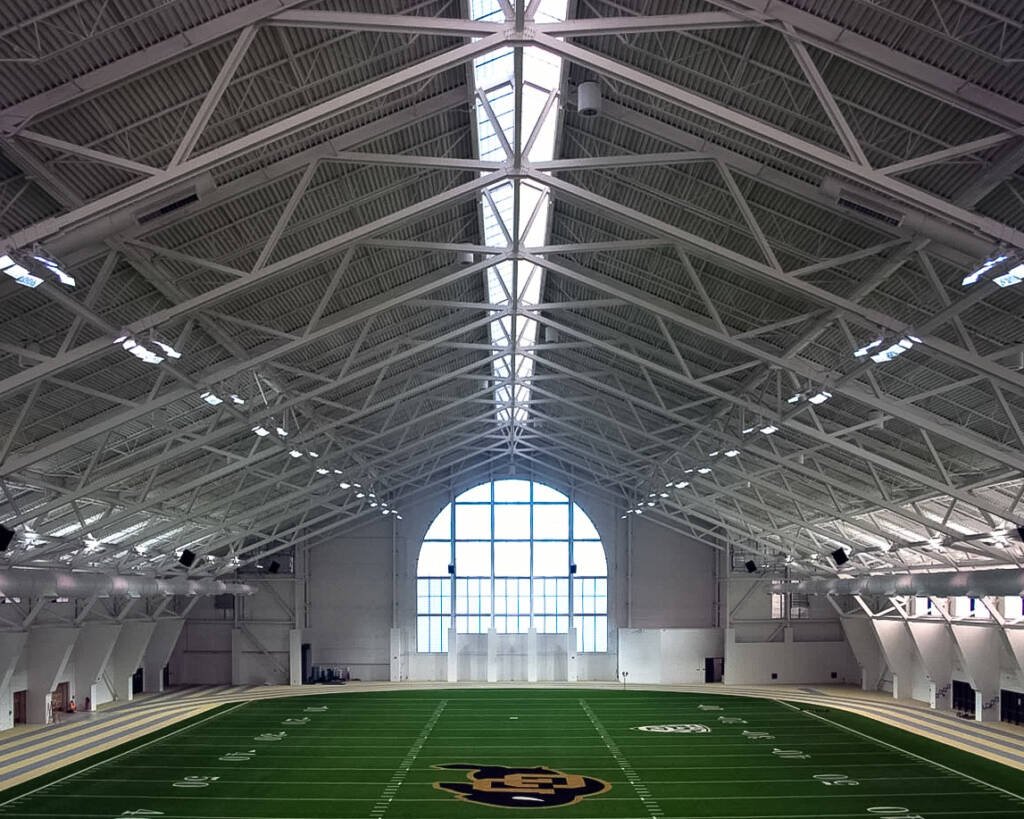
The Designer EC Series is particularly well suited for prominent campus buildings and exceptionally tall spaces such as atriums, auditoriums, student centers, field houses, and large athletic facilities. Its powder-coated aluminum housing can be customized to complement the surrounding architecture, while models are available for ceiling heights reaching approximately 125 feet. The Designer Series also provides the long-throw airflow needed for very large university spaces while remaining visually unobtrusive, as demonstrated at the University of Colorado Boulder.
Potential Benefits
A properly engineered Airius installation could help reduce floor-to-ceiling temperature differences, eliminate persistent hot and cold zones, improve comfort for students and faculty, and help existing HVAC systems distribute conditioned air more effectively. Universities can also apply different Airius models across campus rather than relying on a single solution for every building, allowing airflow strategies to be matched to individual spaces while still integrating with centralized building controls. Improved destratification may also help institutions reduce unnecessary HVAC runtime and support broader campus energy-efficiency and sustainability initiatives.
Proven Results
Airius’ installation at the UC-Boulder demonstrates how controlled air circulation can solve environmental challenges within one of the most demanding types of spaces found on a university campus. CU Boulder’s 108,000-square-foot indoor practice facility includes a full football field and six-lane track beneath a ceiling reaching approximately 90 feet. Because HVAC supply diffusers were located midway up the sidewalls, the university needed a way to effectively mix upper-level air with the occupied space below while maintaining quiet conditions for athletes.
Airius installed 24 Designer Model 125 fans at the peak of the facility and integrated them wirelessly with the building automation system. Following installation, temperature variation was maintained within approximately 3°F from ceiling to floor and wall to wall while the system remained quiet and visually unobtrusive.
While this installation serves an athletic facility, the underlying challenge is common across higher education campuses. Large lecture halls, auditoriums, atriums, libraries, recreation centers, and other high-volume university buildings can face the same difficulty of getting conditioned air from where it accumulates to where occupants actually need it.
Let airius teach you how you can have better airflow
Every university campus contains buildings constructed in different eras, designed for different purposes, and operated under different schedules. Airius systems can be selected and positioned around each building’s ceiling height, architecture, HVAC configuration, occupancy patterns, and building-control infrastructure, allowing institutions to address individual problem areas without applying the same solution everywhere.
The objective isn’t simply to condition more campus space. It’s to make better use of the conditioned air each building is already producing.