
When a commercial building starts feeling too warm during the summer, the first assumption is often that the air conditioning system isn’t large enough.
Facility managers may begin looking into HVAC upgrades, additional rooftop units, or lowering the thermostat in an effort to improve comfort.
But before investing in more cooling capacity, it’s worth asking an important question:
Is the building actually lacking cooling—or is the conditioned air simply not reaching the areas that need it?
Why does a building feel hot when the air conditioning is running?
If your HVAC system is operating but employees or occupants still complain about the temperature, the issue may not be the air conditioner itself.
In many commercial buildings, conditioned air is not distributed evenly throughout the space. Some areas remain comfortable while others become noticeably warmer, creating the impression that the building needs more cooling.
This is especially common in facilities with:
- High ceilings
- Large open floor plans
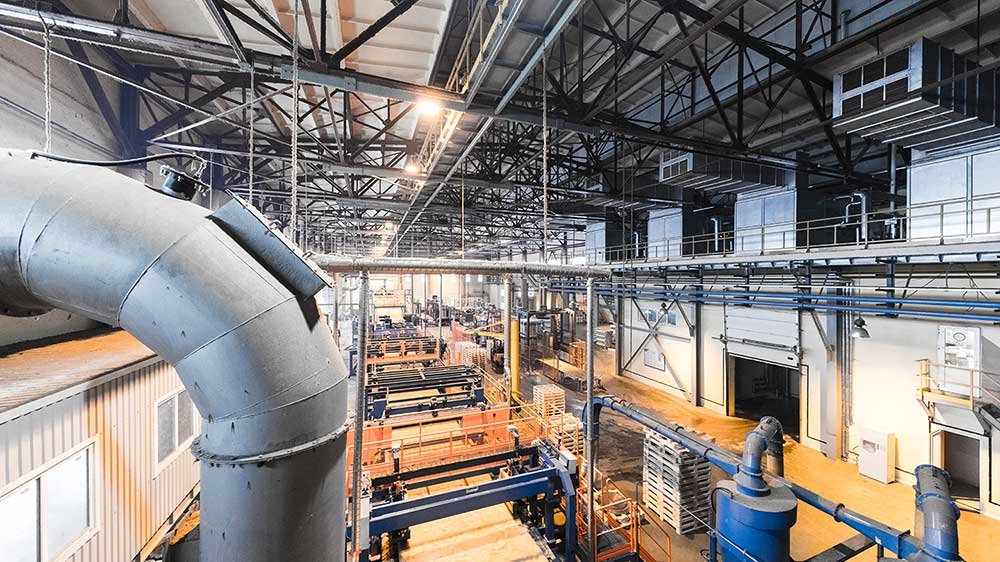
- Warehouses and distribution centers
- Manufacturing facilities
- Retail stores
- Athletic facilities
Signs the problem may not be your HVAC system
Before assuming your air conditioning system needs to be replaced or expanded, look for these common signs:
- Some areas of the building are comfortable while others are consistently warm.
- The HVAC system runs for long periods but temperatures remain inconsistent.
- Occupants in different parts of the building report completely different comfort levels.
- The thermostat reaches its setpoint, but the building still feels uncomfortable.
- Energy bills continue to increase without a noticeable improvement in comfort.
These symptoms often indicate that conditioned air is not being distributed effectively throughout the building.
Why lowering the thermostat isn’t always the answer
When a building feels warm, lowering the thermostat is a natural reaction.
However, if the underlying issue is uneven air distribution, lowering the thermostat often causes the HVAC system to run longer without solving the problem. Some areas become overcooled while others remain warm, increasing energy use without creating a more consistent environment.
Before increasing cooling output, it’s important to determine whether the cooled air is reaching the occupied space as intended.
How building design affects cooling performance
Large commercial buildings present unique airflow challenges.
High ceilings, open layouts, storage racks, production equipment, and interior partitions can all influence how conditioned air moves throughout a facility.
Even a properly sized HVAC system can struggle to maintain consistent temperatures if airflow is uneven.
Understanding how air moves through the building is an important part of improving cooling performance.
When should you consider an HVAC upgrade?
There are situations where additional cooling capacity is necessary. Aging equipment, undersized HVAC systems, or changing building usage can all justify an upgrade.
However, before making a significant capital investment, it’s worthwhile to evaluate whether airflow distribution is contributing to the problem.
Improving how conditioned air is circulated throughout the building may resolve comfort issues while allowing existing HVAC equipment to perform more effectively.
Start with the problem—not the equipment
Comfort issues do not always mean a building needs more air conditioning.
By identifying whether the challenge is cooling capacity or air distribution, facility managers can make more informed decisions, improve occupant comfort, and avoid unnecessary expenses.
Evaluating airflow before investing in new HVAC equipment can help ensure you’re solving the right problem.
Learn More About Airflow Solutions for Commercial Buildings
If your building struggles to maintain consistent temperatures during the cooling season, airflow distribution may be part of the solution.
Talk with our team about your facility:
Learn more about Airius solutions: