Improving Air Distribution with Destratification Fans for Parking Garages
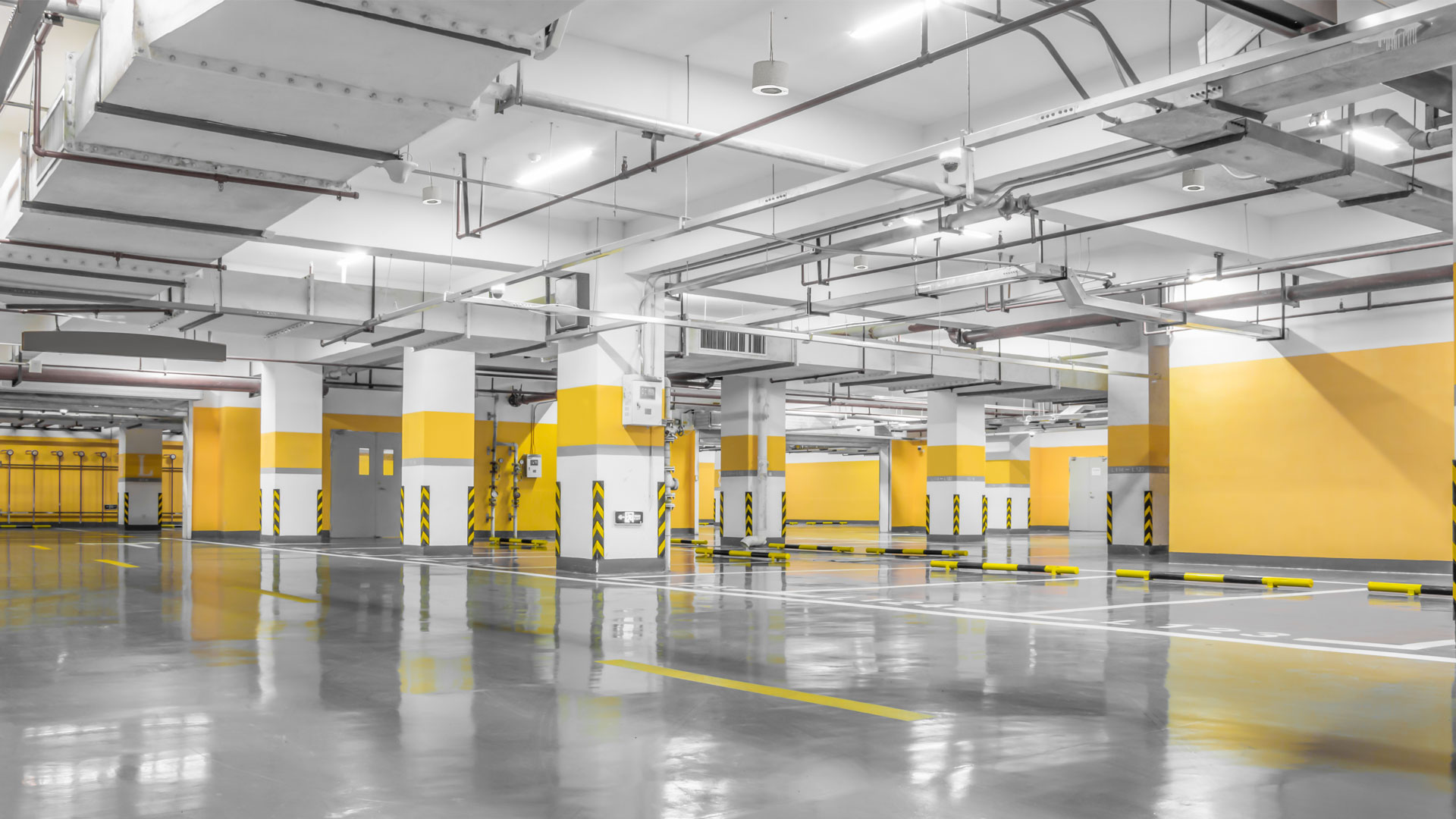
Underground and enclosed parking garages depend on mechanical ventilation to remove vehicle-generated contaminants and maintain safe indoor conditions. Unlike open parking structures, these spaces have limited natural airflow, making effective air distribution throughout the entire garage especially important.
Airius fans can provide supplemental air movement within enclosed garages, helping address stagnant areas and move air toward the facility’s existing exhaust system.
The Challenge
The challenge in an enclosed parking garage is not simply exhausting enough air. That air also has to move effectively throughout the structure. Vehicles can introduce carbon monoxide, nitrogen dioxide, fuel vapors, and other contaminants. Current mechanical codes require enclosed garages to use mechanical ventilation continuously or control it automatically using CO and NO₂ detection.
Large floor plates, structural columns, ramps, walls, and irregular layouts can create areas where airflow is weak. ASHRAE specifically identifies avoiding long airflow paths, preventing short-circuiting between supply and exhaust, and providing adequate airflow throughout the structure as important garage ventilation considerations.
ASHRAE also recognizes supplemental circulation fans in ductless garage systems as a way to mix air, eliminate dead spots, and guide air toward exhaust locations. These circulation fans supplement the primary supply and exhaust system rather than providing the required air changes themselves.
The Airius Solution
Airius fans could provide strategically placed supplemental circulation within underground and enclosed parking structures, helping move stagnant air from difficult areas toward the garage’s existing ventilation and exhaust pathways.
Rather than replacing required exhaust equipment, Airius fans would work alongside the mechanical ventilation system to improve how air moves between supply and exhaust locations.
For parking garages, two Airius systems are particularly well suited.

Air Pear EC Series
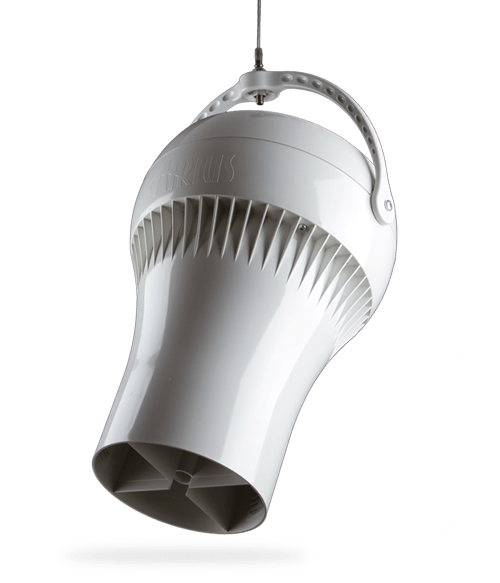
The Air Pear EC Series provides greater flexibility for garages with lower ceilings, irregular layouts, ramps, or areas requiring more localized circulation. Multiple models allow airflow and coverage to be matched to different ceiling heights and zones throughout the structure. Its focused columnar airflow and variable-speed controls can be used to address specific areas where air tends to stagnate while supporting movement toward existing exhaust locations.
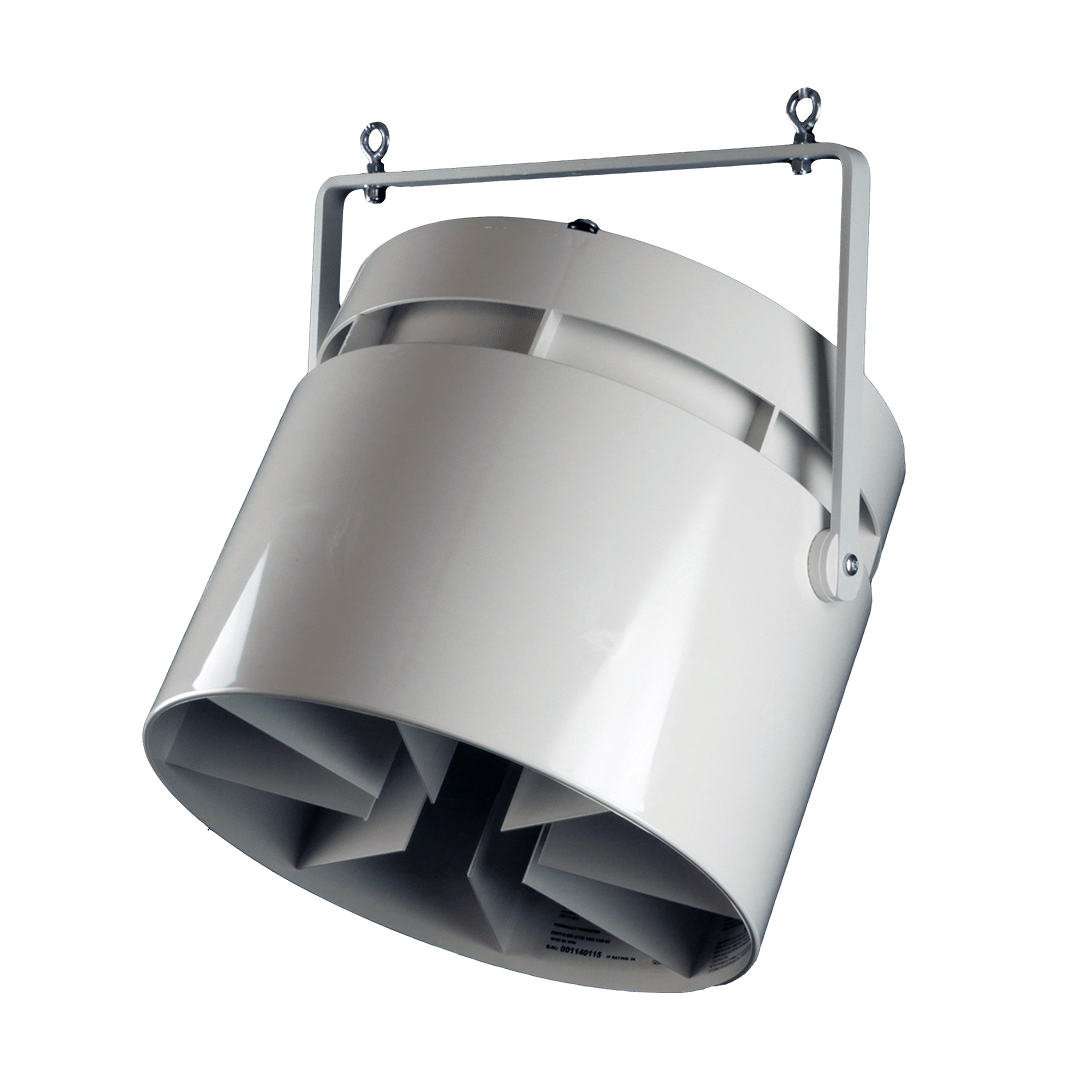
Onyx EC Series
The Onyx EC Series is designed for powerful air circulation in large spaces and is specifically recommended by Airius for garages and workshops. Its high-volume airflow makes it a strong option for larger garage areas where structural elements or long distances between supply and exhaust locations contribute to poor circulation. Variable-speed EC motors and BACnet or 0–10V integration also allow fan operation to be coordinated with the facility's ventilation controls.

Potential Results
A properly engineered Airius installation could help reduce stagnant air zones, improve distribution between ventilation supply and exhaust points, provide more consistent circulation around structural obstructions, and help the existing mechanical ventilation system reach areas that otherwise receive limited airflow.
Improved air distribution could also complement demand-controlled ventilation systems by helping contaminants reach monitored and exhausted areas more effectively rather than remaining concentrated within poorly circulated portions of the garage.
Don't let poor air quality park in your space
Every enclosed garage has different floor dimensions, ceiling clearances, ramps, columns, exhaust locations, traffic patterns, and ventilation requirements.Airius fan placement and ope rating speeds should therefore be designed around the existing mechanical ventilation system and verified so supplemental airflow supports rather than short-circuits the intended ventilation pattern.
Airius fans would not replace code-required supply, exhaust, contaminant detection, or smoke-control systems. The objective is to help the ventilation system move air through the entire garage instead of allowing problem areas to remain stagnant.