Improving Safety, Comfort and Energy Efficiency with Destratification Fans for Distribution Centers
Distribution centers operate across large open spaces with high ceilings, extensive racking, conveyor systems, loading areas, and constantly changing traffic. These conditions can create uneven temperatures, stagnant air, and moisture-related problems that affect both safety and operating efficiency. Airius destratification fans can help improve air circulation throughout the facility, reduce temperature stratification, and support existing HVAC systems while addressing difficult areas that conventional air distribution may not reach effectively.
The Challenge
Distribution centers face several airflow challenges at once. High ceilings allow heated air to accumulate above the occupied zone during colder weather, while workers remain at floor level. Large loading doors introduce significant temperature changes throughout the day, forcing heating and cooling systems to recover repeatedly. Dense racking, conveyors, equipment, and structural obstructions can also create stagnant areas where air does not circulate effectively.
Moisture can become another serious concern. Concrete slabs may remain cool while warmer, humid air enters the building during changing weather conditions. When the slab temperature falls below the dew point, condensation can develop directly on the floor, creating what is commonly known as a sweating slab.
Beyond potential damage to stored materials and equipment, a wet warehouse floor can create a significant slip hazard for employees and interfere with forklift and material-handling operations.
The Airius Solution
Airius fans can provide continuous, controlled circulation throughout distribution centers, helping reduce temperature stratification, eliminate stagnant areas, and move air across floor surfaces and difficult-to-reach portions of the facility.
For distribution centers, two Airius systems are particularly well suited.

Air Pear EC Series
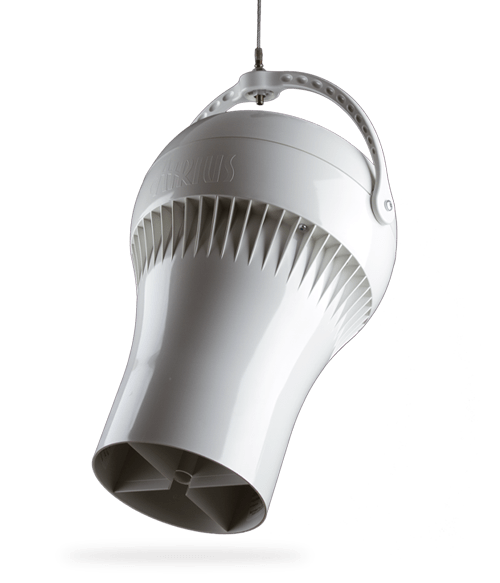
The Air Pear EC Series is the primary recommendation for large distribution centers and high-bay warehouse environments. Its focused columnar airflow helps move accumulated ceiling air toward floor level, where it spreads throughout the facility and becomes recirculated. Multiple models accommodate different ceiling heights and coverage requirements, making the series suitable for facilities with extensive racking, conveyors, and large storage areas. Variable-speed EC motors also allow airflow to be adjusted according to seasonal conditions and integrated with existing building-management systems.
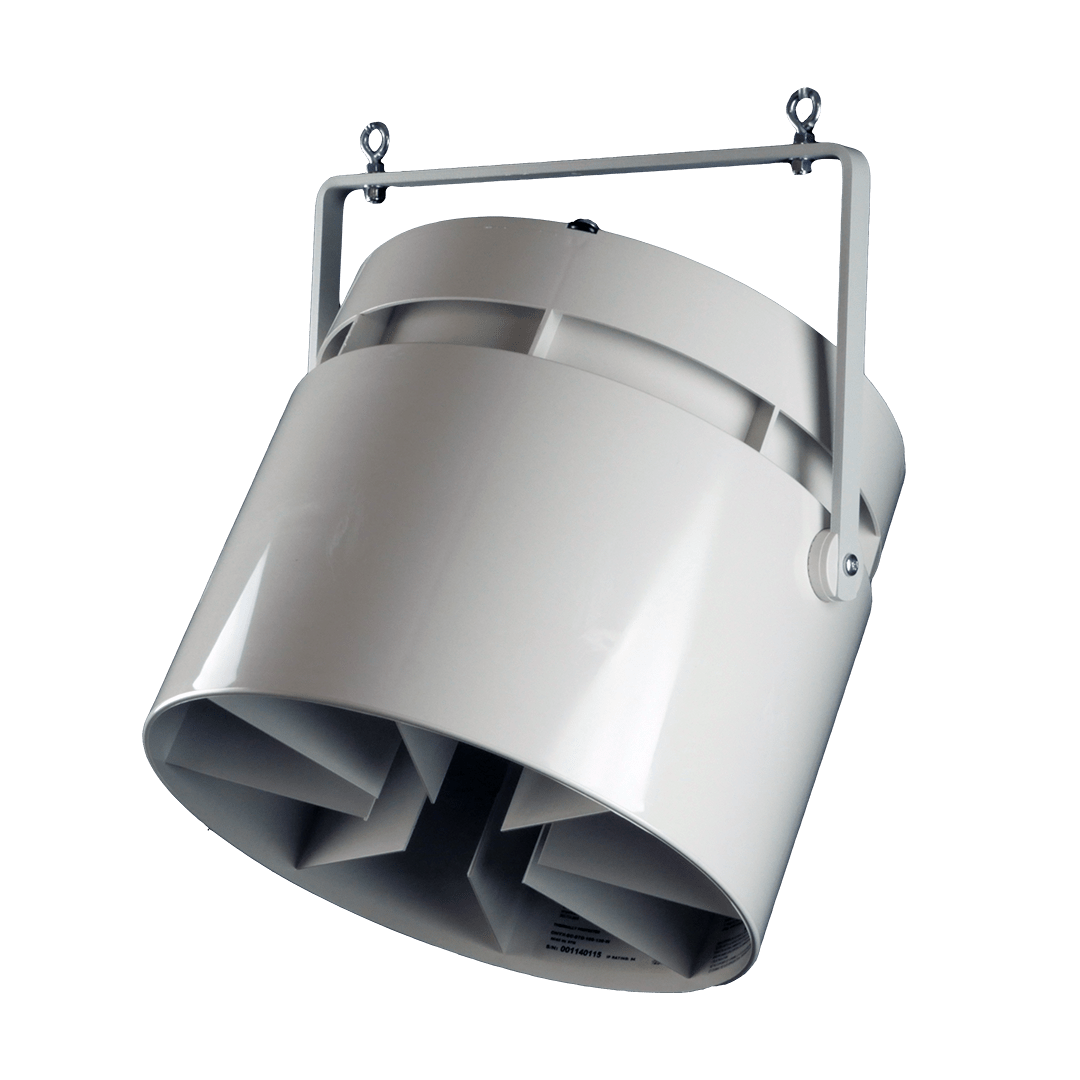
Onyx EC Series
The Onyx EC Series is particularly well suited for loading areas, active warehouse zones, packaging areas, and portions of the facility where stronger air movement or additional cooling-focused circulation is required. Designed for powerful circulation in large industrial spaces, the Onyx EC can help address localized heat buildup and stagnant areas while supporting overall air movement throughout the distribution center. Variable-speed operation allows airflow to be increased during warmer periods or heavy activity and reduced when less circulation is required.
Potential Benefits
A properly designed Airius installation could help reduce floor-to-ceiling temperature differences, improve worker comfort, eliminate stagnant air pockets, support faster recovery after loading doors open, and help existing HVAC systems distribute conditioned air more effectively. Continuous air movement across concrete floors can also help reduce conditions that contribute to sweating slabs by limiting stagnant humid air and helping maintain slab temperatures above the dew point. Improved circulation may additionally help reduce unnecessary heating and cooling demand by making better use of conditioned air that would otherwise remain trapped near the ceiling.
Proven Results
A distribution center in Fort Mill, South Carolina faced persistent sweating slab problems, particularly during seasonal weather changes when warm days were followed by colder, rainy nights. Moisture developed on the concrete floor overnight and into the morning, creating hazardous slip conditions throughout portions of the facility.
Airius designed a system using 10 Air Pear Series fans strategically distributed at ceiling level. The fans projected air downward in controlled columns, continuously mixing the space while providing gentle airflow across the slab and through hard-to-reach areas around the conveyor system.
Following installation, the facility reported that the floor remained dry during weather conditions that had previously caused significant sweating. Several months later, the distribution center reported that sweating slab problems had remained eliminated throughout areas covered by the Airius system, including during multiple weather events that would previously have produced condensation.
Start distributing better airflow
Every distribution facility has different ceiling heights, racking layouts, conveyor systems, loading doors, HVAC equipment, floor conditions, and operating schedules. Airius systems can be selected and positioned around those conditions, using Air Pear fans for broad destratification and floor-level circulation and Onyx fans where stronger airflow is required in active warehouse or loading areas.
The objective isn’t simply to move more air. It’s to keep the entire distribution environment safer, more consistent, and easier to control.